
Winner of the 2026 IDA Pinnacle Award
The Community Safety Host Initiative has received the International Downtown Association’s 2026 Pinnacle Award in Public Space Management and Operations, IDA’s highest recognition for excellence and innovation in urban place management.
Developed here in Winnipeg, CSHI was recognized for demonstrating how safer public spaces can be built through relationships, de-escalation, lived experience and community leadership.
[Explore CSHI on the International Downtown Association website]
PCS is a project partner, providing the current employment component of the Community Safety Hosts initiative, which is led by Zoongizi Ode (formerly FearlessR2W) and emerged from a 2-year Housing Solutions Lab. Other project partners include NECRC and the Winnipeg Public Libraries.
A Different Approach to Community Safety
The Community Safety Host Initiative (CSHI) is a community-led alternative to conventional security that creates safer, more welcoming access to public spaces and essential services. Grounded in Wahkohtowin and the interconnectedness of people and relationships, CSHI shifts safety from an enforcement-first model toward one built on connection, dignity and practical support. At the same time, the initiative addresses barriers to employment and creates meaningful career pathways by recognizing lived experience as expertise.
Community Safety Hosts are supported to be trauma-informed, with a priority on systemic harm reduction to create safer access through removing barriers and empowering others through education and support.
This program seeks to address:
– Barriers to housing & employment
– Systemic racism in public places
– Inadequate training in safety roles
– Current (security) roles inadequate
– Damaging public perceptions
The training components were determined on these principal pillars:
– Leveraging both modern & traditional knowledge, as well as lived experience
– Wahkohtowin, an advocacy lens and leveraging existing neighborhood assets
– Seeking to provide acute barrier knowledge and care
– Meeting existing regulatory standards and industry best practices (ie. 40-hour security guard training)
Community Safety Hosts are recruited with an emphasis on providing an opportunity for sustainable employment to youth who have aged out of care, while investing in and empowering persons with lived experiences to better serve the community. Applicants from the R2W neighborhood, youth aging out of care or Indigenous youth are prioritized for this program.

See Why CSHI Was Recognized
“Safer public spaces can be built through trust, care, and community leadership.”
CSHI by the Numbers
87,242
Hours Worked
89,444
New Connections
19,689
Referrals to Resources
6,353
Escalated Incidents Recorded
78%
De-escalated Without Police Involvement
August 2022–September 2026
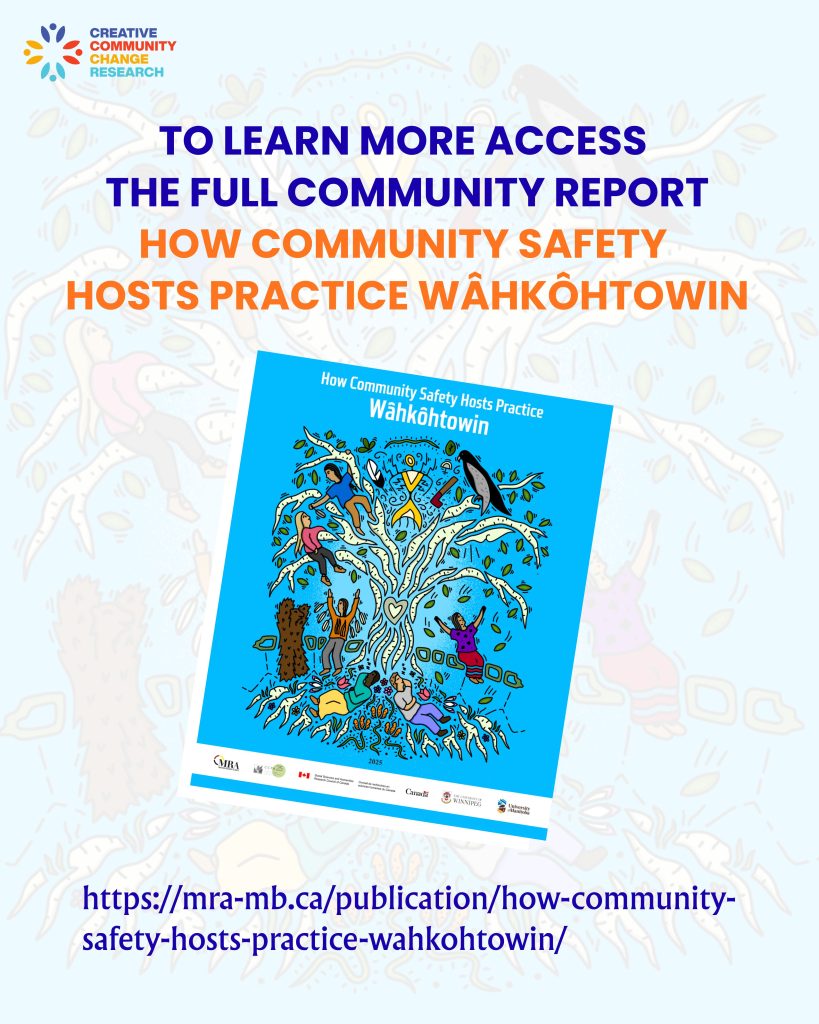
Evidence Supporting a Relationship-Based Approach to Safety
This study analyzes hundreds of interactions between Community Safety Hosts and community members across Winnipeg sites. The findings show that when safety is grounded in connection, dignity, and practical support, conflict can be reduced and access to vital public resources can improve.
Hiring, training, and empowering from within the community
A Community Safety Host receives security guard training but is differentiated by an additional 130+ hours of in-class training backed by 3 months of supported practical field experience specifically assembled and tailored to the role of a Community Safety Host.
Are you interested in becoming a Community Safety Host?
This role uses a trauma informed, harm reduced approach to welcoming people seeking support into critical facilities by removing barriers, providing warm handoffs and system navigation support. Safety hosts work in person, usually full time (35-40 hours per week) and are paid a minimum of a living wage. We encourage persons with lived experience to apply.
You will leverage this experience, empowered with additional training, local area knowledge, a trauma informed & harm reduction lens and understanding of available resources.
A Typical Community Safety Host May:
- Welcome visitors into a library or social service office
- Help someone access community resources
- De-escalate conflicts between members of the public
- Respond to mental health crises
- Administer naloxone during an opioid poisoning
- Support staff when challenging situations arise
- Build relationships with community members experiencing homelessness, addiction, or poverty
- Work at different sites throughout the week
Community Safety Hosts regularly work alongside people experiencing homelessness, active substance use, mental health crises, and other significant barriers. Applicants should carefully consider whether working in these environments aligns with their own wellness and recovery goals.
Community Safety Hosts are not counsellors, outreach workers, or social workers. They are trauma-informed safety professionals who help create access to public spaces and services.
The training, at a glance
Security Guard
Security Guard Training: 40 hours
- Manitoba Security Guard Training Program
Community Safety Host
Security Guard Training: 40 hours
- Manitoba Security Guard Training Program
CSH Training: 130 hours
- Security Philosophy
- Personal Defensive Procedures
- Emergency First Aid
- Applied Suicide Intervention Skills Training (ASIST)
- Nonviolent Crisis Intervention (NCI)
- Opioid response and Naloxone administration
- Psychological First Aid
- Conflict Resolution Scenarios
- Disability Awareness Resource Training (DART)
- Disability Emergency Management (DEM)
- Wahkohtowin (Interconnected nature of all)
- Leveraging Local Assets
- Trauma-Informed Care & Vicarious Trauma training
- Restorative Practices
- Understanding Harassment
- EIA Navigation training
- Effective Communications Skills Workshop
- Advocacy Training
- 2SLGBTQIA+ Awareness Training
- C3P Commit to Kids Training
- Harm Reduction
- Counseling Skills workshop
- Principles of Reporting
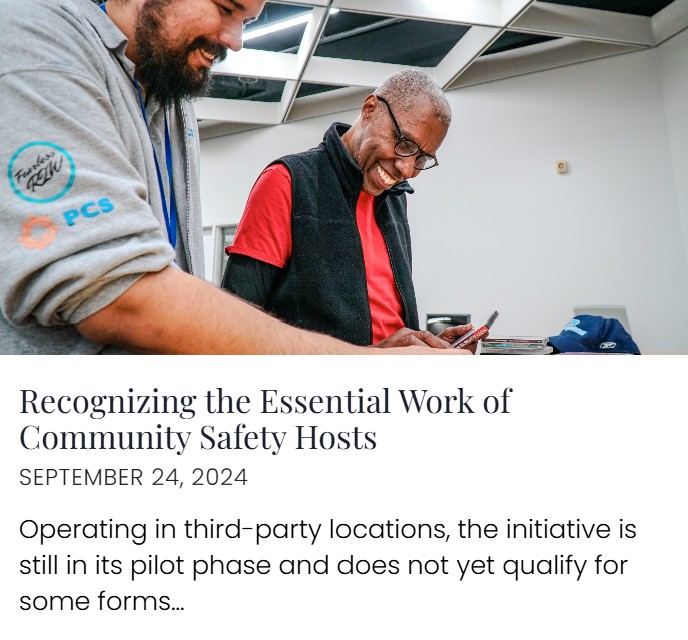
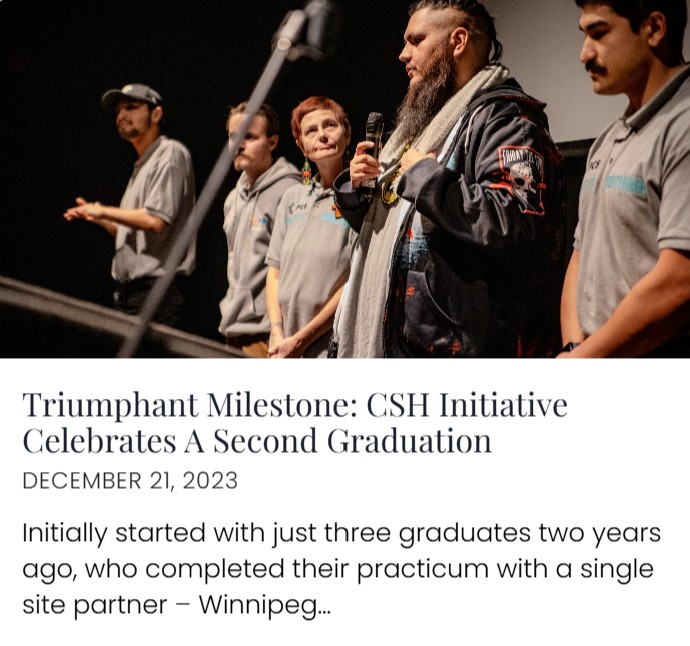
Community Safety Hosts In The News
Read more about the CSHI
Share on


